Why Growing Carrots at Home Beats Anything from the Store
Carrots aren’t just orange sticks in a bag — they’re a rainbow crop that can bring sweetness, crunch, and even color to your garden. The trick is learning what they like: deep, loose soil, steady watering, and a bit of patience. Once you learn how to grow carrots, they will become one of the most rewarding crops you’ll ever grow.
Why Carrots Deserve a Spot in Your Garden
Yes, carrots are delicious fresh, roasted, or tucked into soups. But there are other perks most people don’t mention:
Carrot tops are edible — they can be used to make a zesty pesto or sautéed like parsley.
They improve your soil — carrots are “bio-drillers.” Their taproots break up compacted ground, creating channels that facilitate the movement of water and microbes.
Frost makes them sweeter — cold snaps trigger the roots to store sugars. If you’ve ever had a winter-dug carrot, you know the difference.
Timing Matters: Spring, Summer & Fall Carrots
Most folks sow carrots once and hope for the best. But you can stagger plantings to keep harvests coming.
Early spring: Plant a few weeks before the last frost. These mature in late spring/early summer.
Late spring to summer: Sow again for a mid-season crop — ensure your soil stays cool and moist.
Late summer for fall: This is my favorite. Fall carrots sweeten after the first frost. Plant 8–10 weeks before your first expected freeze.
Bonus tip: In mild climates, you can overwinter carrots by covering them with a blanket of straw or placing them in a cold frame. They’ll hold in the soil until you’re ready to pull them.
Direct-Sowing Done Right
Carrots hate transplanting. Their taproots want to go straight down from day one. That means seeds go directly into the soil or container.
Soil temp: 45–85°F to germinate, but cooler (below 70°F) once growing.
Spacing: Scatter thinly and thin to 2–3 inches apart.
Depth: Just ¼ inch — too deep, and they struggle.
If tiny seeds frustrate you, look for pelletized carrot seed. Easier to handle, less thinning.
Carrot Varieties Beyond the Grocery Store
We’ve already touched on Nantes, Danvers, Chantenay, Imperator, Mini, and Parisian. Let’s add a few named varieties home gardeners love:
Dragon: Purple skin, orange inside, with a spicy-sweet bite.
Bolero: Disease-resistant, long storage life.
YaYa: Quick grower, great in warmer climates.
Yellow Moon: Golden yellow, mild flavor.
Atlas: An actual “ball carrot,” perfect for shallow or rocky soils.
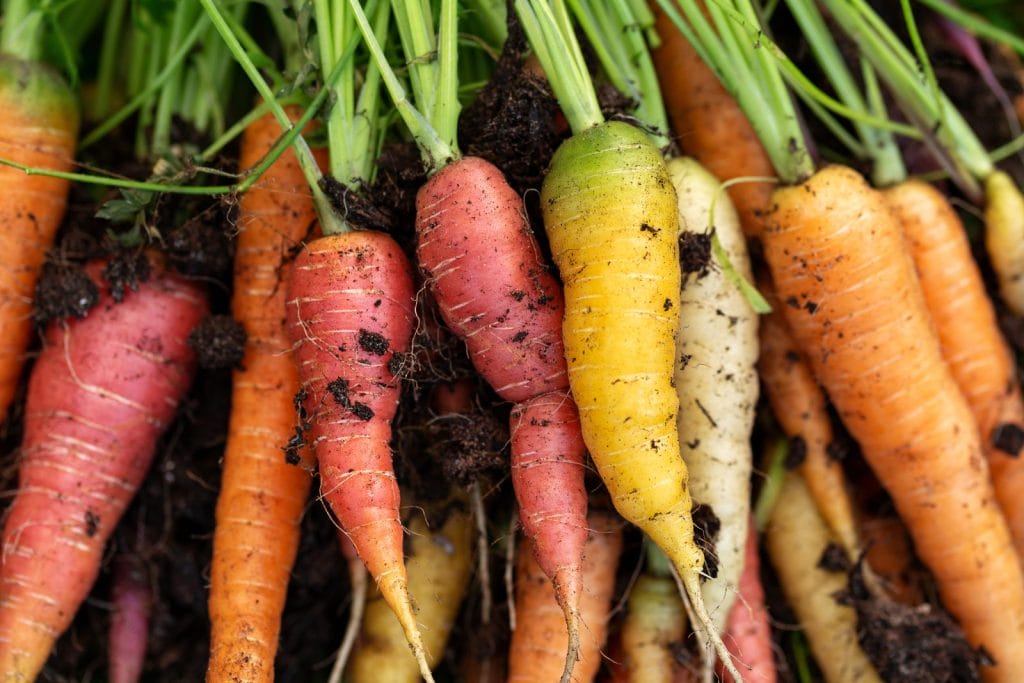
Growing your own means you get the whole rainbow — red, purple, yellow, white, and of course, classic orange.
Carrots need consistency above all. Here’s what works best:
During germination: Keep the soil surface constantly moist. A board or burlap laid gently over the row helps reduce evaporation until the seedlings sprout.
After sprouting: About 1 inch of water weekly, soaking deeply so roots chase moisture downward.
As they mature: Step up to 1½–2 inches weekly if it’s hot and dry. Too little = woody roots. Too much after drought = split carrots.
Feeding Carrots: Less Is More
Carrots are light feeders. Too much fertilizer — especially nitrogen — gives you fluffy tops and stubby roots.
Before planting: Mix in finished compost.
Mid-season: Side-dress with a balanced, low-nitrogen organic fertilizer once the greens reach 4 inches in height.
Carrot Pests & Problems (and Simple Fixes)
Carrots aren’t plagued with endless problems, but they do have a few repeat offenders.
Carrot rust fly: Larvae tunnel into roots. Fix: Use floating row covers and rotate crops.
Flea beetles: Tiny holes in leaves. Fix: Plant radish as a trap crop, or use row covers.
Root-knot nematodes: Cause galls on roots. Fix: Rotate crops, plant marigolds, or let the bed rest.
Wireworms: Damage seedlings. Fix: Bury potato “traps” before planting to detect them, then turn the soil to expose larvae.
Prevention trick: Rotate where you grow carrots each year, and don’t follow them with celery, parsley, or dill (same family, same pests).
Harvest & Storage Hacks
Carrots don’t ripen all at once. That’s good news — you can harvest as you need them.
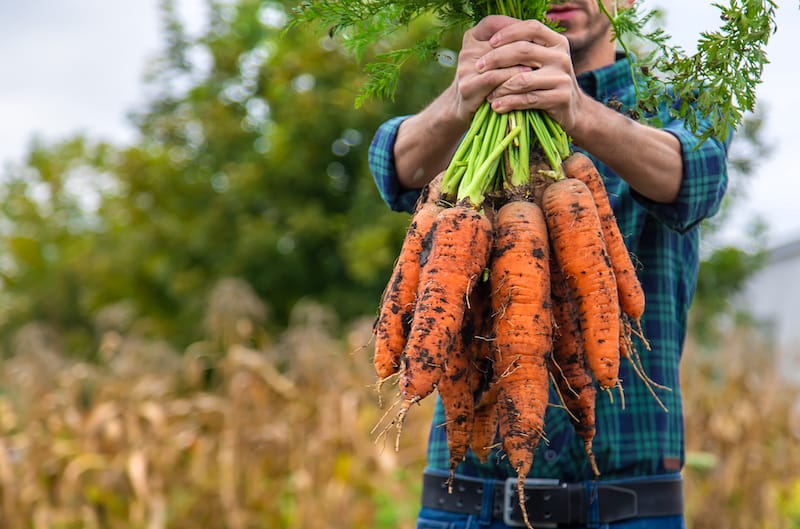
When to pull: 60–90 days after sowing, or when shoulders peek above the soil.
How to Harvest: If the soil is loose, gently tug the greens. If compact, loosen first with a fork.
Storage: Trim greens to 1 inch (they sap moisture from roots). Store in damp sand, a root cellar, or leave them in the ground under mulch until you’re ready.
Soil-Building Bonus (Why carrots leave your bed better)
Carrots don’t just feed you; they tune up the bed. Those taproots act like gentle drills, leaving tiny channels that facilitate the movement of air, water, and microbes. That’s gold for whatever comes next.
Make the most of that freshly loosened soil:
Follow with shallow-rooted greens, such as lettuce, spinach, arugula, or baby brassicas. They slip right into those carrot-made tunnels and take off.
Top-dress, don’t till. After harvest, spread a thin layer of compost and a light layer of mulch. Protect the structure you just earned.
Sow a quick cover crop (oats or buckwheat) if you’re between seasons. It keeps the soil busy, adds organic matter, and blocks weeds.
Water gently the first week after pulling carrots. The soil settles, and the new roots quickly find those channels.
Final Thought (Simple rhythms that win)
Carrots can be fussy about space and moisture, sure—but they repay steady care with the sweetest crunch in the garden. Match the variety to your soil, keep the surface evenly moist through germination, thin without mercy, and let mulch smooth out the ups and downs. If pests appear, apply row cover early and rotate beds thoroughly. Do that, and you’ll have crisp, colorful roots ready to pull for most of the year—no drama, just good food from a bed that gets better every season.
Carrot Growing FAQ (Quick, Down-to-Earth Answers)
Loose, stone-free, and deep enough for the variety you chose. Think “crumbly sandbox,” not heavy clay. Mix in finished compost, skip fresh manure (it causes hairy, forked roots).
pH: ~6.0–6.8
Depth guide: Parisian/Atlas 4–6″, Nantes/Danvers 8–10″, Imperator 12″+
Keep the surface constantly moist for 7–21 days. Lay burlap or a scrap board over the row to shade and slow evaporation, check daily, and remove as soon as you see green.
Sow ¼” deep, then mist (don’t blast) the bed
Pelletized seed = easier spacing, less thinning
Stay steady. Aim for ~1″ per week early on, then 1½–2″ in hot, dry spells. Deep soaks beat frequent sprinkles. Mulch helps keep moisture even.
Big swings (drought → deluge) cause cracking
Shallow types (Parisian, Mini) dry out faster—check more often
Snip extras at the soil line when seedlings are ~2″ tall. Leave 2–3″ between plants. If you must pull, water first so the soil releases its grip.
Yes. Use a pot at least 12″ deep (less for ball/mini types) with a light, fluffy mix. Water a bit more often—containers dry out faster.
Carrots are light feeders. Blend in compost pre-plant. If needed, side-dress once greens hit ~4″ with a balanced, low-nitrogen organic fertilizer.
Float row cover from day one and rotate beds yearly. Keep beds tidy. For weevils, consider beneficial nematodes; for flea beetles, use radish trap crops or cover.
Most varieties are ready in 60–90 days. Cool temps trigger sugar storage, so fall/after-frost carrots taste sweeter. Trim tops to 1″ for storage.
Carrots “bio-drill” your bed. Follow with shallow-rooted greens (lettuce, spinach) to enjoy that loosened soil. Avoid back-to-back umbellifers (celery, parsley, dill).
Disclosure: This article may contain affiliate links. If you purchase through these links, The Bright Garden may earn a commission at no extra cost to you.
Nicole started The Bright Garden after years of hands-on learning in her own backyard, where she fell in love with healthy soil, native plants, and gardening the natural way. She shares honest, experience-based tips and enjoys time outdoors — gardening, fishing, and slow living with family.
Gardening style: Organic, a little wild, always evolving.
Current favorites: Worm bins, pollinator plants, backyard dinners.


 Written by