Homemade Salt-Free Vegetable Stock From Garden Scraps
 Written by
Farm To Table Recipes
Don’t Throw Out Your Veggie Scraps
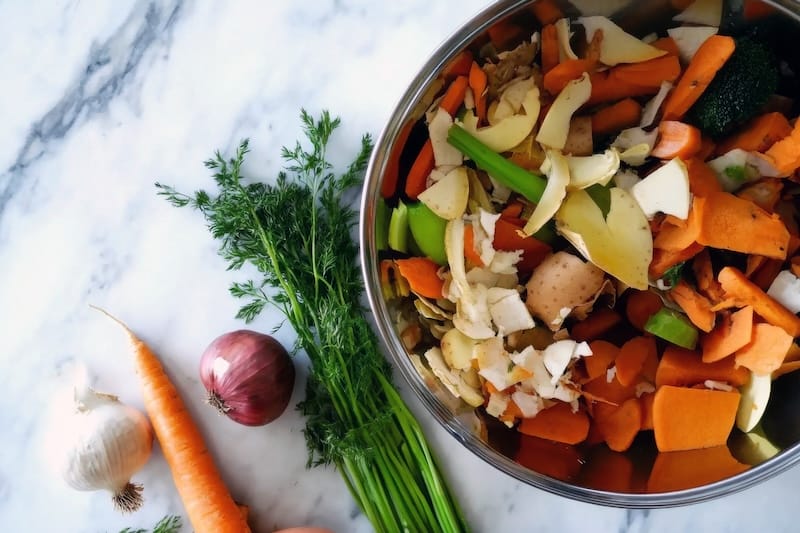
Sometimes the garden gives us more odds and ends than we know what to do with — carrot tops, onion skins, a lone parsley stem. Instead of composting all of it straight away (though the pile is always hungry), I like to save those scraps in a freezer bag. When the bag’s full, out comes the soup pot. What you get is a salt-free vegetable stock that’s rich, earthy, and versatile — the quiet backbone of countless soups, stews, and risottos.
I started making this stock years ago when I noticed that store-bought cartons mostly tasted like saltwater. Once you simmer your own, you realize the flavor is in the vegetables themselves. Plus, no plastic waste, and you know exactly what’s in it.
Why This Recipe Works
A homemade stock that’s nourishing and endlessly adaptable.
Seasonal Flexibility
Whatever’s fresh — leeks in spring, zucchini in summer, squash peelings in fall — they can all go in the pot. Well, maybe not the cucumber peels – save those for deterring ants.
Healthy & Wholesome
No salt, no additives, just vegetables and water. The flavor is clean and deep, not overpowering.
Simple Method
Toss in the scraps, simmer gently, and strain. Done. No fussing.
Make-Ahead Friendly
It freezes beautifully, so you can stock (pun intended) up for winter soups.
Ingredients
- 8–10 cups mixed vegetable scraps (or fresh cut vegetables)
- carrot peels, onion skins, celery ends, mushroom stems, herb stems, zucchini trimmings, leek tops, etc.
- 2 bay leaves
- 6–8 black peppercorns
- 2 cloves garlic, smashed (optional)
- 12 cups cold water
(Note: avoid too much cabbage, broccoli, or beet — they can overwhelm the flavor.)
Yield & Servings
- Makes about 3 quarts (12 cups) of stock.
- Enough to use as the base for 2–3 large soups or stews, serving 6–8 people depending on the recipe.
Ingredient Notes
Fresh Produce
Carrots, onions, and celery are the classic trio, but scraps keep things thrifty and seasonal.
Proteins or Grains
Not needed here — this stock is a blank canvas.
Flavor Boosters
Bay leaf and peppercorns add subtle depth without overshadowing the vegetables.
Instructions
- Collect scraps. Keep a freezer bag and add clean vegetable trimmings until you have about 8–10 cups.
- Load the pot. Add scraps, bay leaves, peppercorns, and garlic if using.
- Cover with water. Pour in about 12 cups of cold water.
- Bring to a simmer. Heat gently, then lower to a soft simmer.
- Cook low and slow. Let it go for 45 minutes to 1 hour, stirring occasionally.
- Taste and adjust. Remember — this is unsalted, so the final dish you use it in will need seasoning.
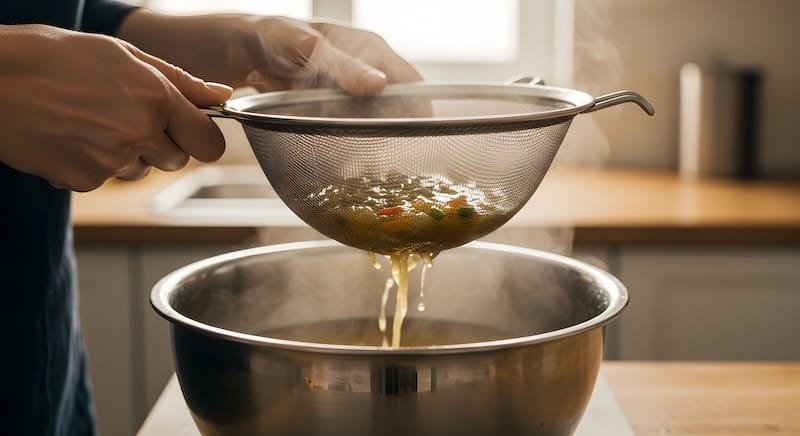
- Strain. Pour through a fine sieve, pressing gently to extract the liquid.
- Cool and store. Refrigerate for up to 5 days or freeze in jars/ice cube trays for up to 4 months.
Cooking Variations
Stovetop Method
As above — simple simmer, strain, and store.
Oven/Grill Method
Roast the scraps at 400°F for 30 minutes before simmering. Adds a rich, smoky undertone.
Slow Cooker/Instant Pot
Toss everything in, cover with water. Cook on low for 6–8 hours (in a slow cooker) or 20 minutes at high pressure (in an Instant Pot).
Easy Substitutions & Seasonal Variations
You can genuinely make this stock year-round with whatever’s coming out of the garden.
Vegetables or Greens
- Swap in fennel fronds for a sweet, anise note.
- Add kale stems for a heartier, darker broth.
Proteins
Not relevant here — but you could add a Parmesan rind for extra depth (skip if vegan).
Grains or Starches
Potato peels add body, making the stock a little cloudy but satisfying.
By Season
Spring Version
Leeks, green garlic, parsley stems.
Summer Version
Zucchini ends, tomato cores, corn cobs.
Fall Version
Squash skins, carrot tops, thyme stems.
Winter Version
Parsnip peelings, celery root trimmings, rosemary sprigs.
Serving Suggestions & Storage
Pairings
Use as a base for lentil soup, risotto, or gravy.
Toppings or Garnishes
If sipping as a broth, add a squeeze of lemon or a pinch of fresh herbs right before serving.
Storage Tips
Fridge
Keeps up to 5 days in a sealed jar.
Freezer
Portion into ice cube trays or pint jars — perfect for pulling out just what you need.
Frequently Asked Questions
Can I freeze this recipe?
How long does it last in the fridge?
Can I make this vegetarian/vegan/gluten-free?
What seasonal produce works best?
Final Tip
Don’t overthink it — this stock is forgiving. The trick is consistency: keep that freezer bag handy, keep tossing scraps in, and one day you’ll realize you’ve been making stock all year without even trying. And if you find yourself with too much? Well, the compost pile will never complain.
Share this post
Disclosure: This article may contain affiliate links. If you purchase through these links, The Bright Garden may earn a commission at no extra cost to you.
Table of Contents
- Don’t Throw Out Your Veggie Scraps
- Why This Recipe Works
- Seasonal Flexibility
- Healthy & Wholesome
- Simple Method
- Make-Ahead Friendly
- Ingredients
- Yield & Servings
- Ingredient Notes
- Fresh Produce
- Proteins or Grains
- Flavor Boosters
- Instructions
- Cooking Variations
- Stovetop Method
- Oven/Grill Method
- Slow Cooker/Instant Pot
- Easy Substitutions & Seasonal Variations
- Vegetables or Greens
- Proteins
- Grains or Starches
- By Season
- Spring Version
- Summer Version
- Fall Version
- Winter Version
- Serving Suggestions & Storage
- Pairings
- Toppings or Garnishes
- Storage Tips
- Fridge
- Freezer
- Frequently Asked Questions
- Final Tip
About the Author

Nicole Stark
Nicole started The Bright Garden after years of hands-on learning in her own backyard, where she fell in love with healthy soil, native plants, and gardening the natural way. She shares honest, experience-based tips and enjoys time outdoors — gardening, fishing, and slow living with family. Gardening style: Organic, a little wild, always evolving. Current favorites: Worm bins, pollinator plants, backyard dinners.
Explore More
Free gardening tools, finders and interactive guides to help you grow better.