How I Create a Halloween Garden That Turns Into a Thanksgiving Garden
 Written by
DIY Projects
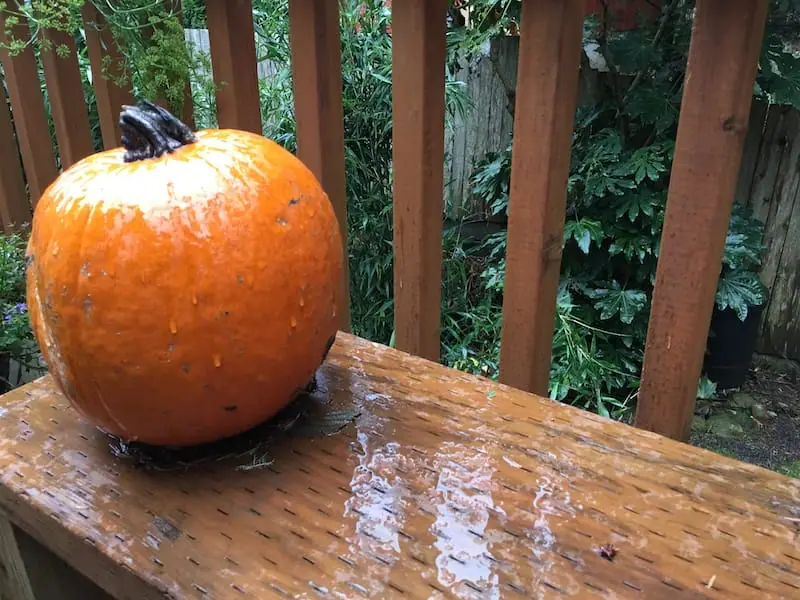
Early September feels ridiculously early to start thinking about a Halloween garden until you remember that gardens do not work on the same schedule as the candy aisle at Target. If you want the garden to look a little spooky by October, but still pretty enough that you are not ripping everything apart on November 1, this is actually when you need to start thinking about it.
The trick is not really creating a Halloween garden. It is creating a good fall garden first, then letting Halloween temporarily make it weird.
That means September is for plants, fall color, and figuring out what you already have. Early October is when pumpkins, gourds, and a few darker touches start creeping in. Then, right before Halloween, you can bring out the ghosts, spiders, skeletons, and whatever other questionable characters you have stored in the garage.
When Halloween is over, those characters leave. The garden stays.
Start Your Halloween Garden in Early September or Mid-August (even better).
Mid-August or September is when I would concentrate on the part of the garden that needs to last.
Before buying anything, walk around and look at what is already there. This is one of those rare times when an imperfect garden can suddenly become much more interesting.
A plant leaning sideways? Interesting.
A dried sunflower head? Keep looking.
An old vine twisting around a trellis? You may already have Halloween decorations and didn’t know it.
What can I actually plant in September for a Halloween garden?

This depends quite a bit on where you live, which is why I would not follow one of those lists that tells everyone in America to plant the same six things on September 10.
In warmer areas, September may still feel like summer. Farther north, gardeners may already be watching nighttime temperatures.
But this is generally the time to start looking for plants that like cooler weather and can carry the garden through fall.
Pansies and violas can bring in deep purples, oranges, yellows, and nearly black shades. Ornamental kale and cabbage get even better looking as temperatures cool. Mums are an obvious choice, but there is a reason they show up everywhere in fall. They work.
Don’t forget edible plants either.

Purple kale, Swiss chard, sage, rosemary, and other fall herbs and greens can be surprisingly beautiful mixed into ornamental beds and containers. Deep green leaves also give all those orange pumpkins a visual landing point. Green beans will twist, climb, hang down, and taste great when it is time for Turkey Dinner! And one of my favorites is delicata squash! Yum!
If you are buying plants, think beyond Halloween.
Ask yourself whether you will still want that plant sitting by the front door on November 15.
If the answer is yes, you are on the right track.
And no, September isn’t the time to plant your Halloween pumpkins.

I have to mention this because gardening calendars can make us feel like anything is possible if we get outside quickly enough.
If you are standing in the garden in September thinking you might plant pumpkin seeds and have pumpkins ready for Halloween, save those seeds for next year.
Pumpkins generally need a long growing season, and September is far too late in most places to start a Halloween crop.
Buy pumpkins from a local grower, farm stand, farmers market, or store instead.
Then make yourself a note for next year.
If growing your own Halloween pumpkins sounds fun, that project starts much earlier. Plant the seeds in early August. But you can go to a local nursery and get larger seedlings that might be able to produce your spooky fruit by Halloween. The nice thing is that pumpkins will continue to ripen til Thanksgiving, and then you have just what you need for a lovely pie.
Before You Clean Up the Summer Garden, Look at It Again
There is always that point toward the end of summer when the garden starts looking tired, and I get the urge to clean everything up.
October is one reason not to get too enthusiastic.
Some of the plants we consider finished are just entering their spooky phase.
Dried flower heads, seed pods, twisting vines, ornamental grasses, and bare branches can be far more interesting in a Halloween garden than another decoration from a box.
A perfectly groomed garden is lovely.
A slightly unruly garden with a pumpkin tucked under a twisting vine looks like it might have a story.
That is much better for Halloween.
Leaving some stems and seed heads can also provide food and habitat for birds and insects. You don’t have to leave everything standing. This isn’t an all-or-nothing decision. Just look before you cut.
Something you were about to toss into the compost pile may deserve another month in the garden.
In Early October, Let the Garden Get a Little Strange
By early October, the basic fall garden should be taking shape.
Now we can have some fun.
This is when I would start adding pumpkins, gourds, lanterns, baskets, interesting branches, and darker accents.
Not everything has to be orange.
White pumpkins look beautiful against dark foliage. Green and blue-gray pumpkins can carry right into Thanksgiving. Deep red, burgundy, and purple plants make the brighter oranges stand out without making the whole garden look like Halloween exploded on the porch.
How do you make a garden spooky without making it look like a Halloween store?
Use what the garden is already giving you.
A bare branch in an old pot can look surprisingly eerie.
Let a fading vine stay on a trellis a little longer.
Put a pumpkin somewhere slightly unexpected instead of lining twelve of them across the front step like little orange soldiers.
An old terra cotta pot tipped on its side can suddenly look intentional.
October is wonderfully forgiving that way.
You can also add a few darker plants or containers. Black mondo grass has wonderfully dark foliage where it grows well, although I would not buy a permanent plant solely because it looks creepy for three weeks if it belongs in your climate and your garden anyway- wonderful.
That is really the rule I would use for this entire project.
Build the fall garden first. Add the creepy afterward.
What should I buy if I want to use it again for Thanksgiving?
This is where a little restraint in October pays off in November.

Pumpkins can stay.
Gourds can stay.
Lanterns can stay.
Baskets can stay.
Terra cotta pots can stay.
Mums and fall flowers can stay.
Ornamental grasses can stay.
Branches and other natural materials can stay.
That gives you most of the garden before you have purchased a single spider.
I have a very simple test for everything else:
If I remove the skeleton, does this still look good?
If it does, you have bought something for fall rather than something that will need to disappear at midnight on October 31.
Think About What Your Halloween Garden Looks Like at Night
This is easy to forget.
We spend all day arranging pumpkins and moving pots three inches to the left, but most trick-or-treaters will see the garden after dark.
Go outside one evening and look at your house from the sidewalk.
It changes everything.
Ordinary ornamental grasses throw enormous shadows. Branches suddenly look crooked and strange. A trellis that barely gets noticed during the day can become dramatic with light behind it.
You don’t necessarily need more decorations.
You may need better shadows.
Keep the spooky path safe.
There is one place I would not get creative: the walking path.
Keep steps, sidewalks, and paths clearly visible.
Pumpkins and decorations have a strange ability to migrate into exactly the spot where somebody needs to put a foot.
Use outdoor-rated lighting where appropriate and make sure cords aren’t creating their own Halloween hazard. Open flames and dry fall plants are not a combination I would fool around with either. Battery-operated candles can give lanterns that warm flicker without putting a flame next to dried leaves. Ooooo, and battery-operated strobe lights make everything spooky.
The garden can look mysterious.
The front step should not be mysterious.
The Week Before Halloween Is When the Spooky Stuff Comes Out
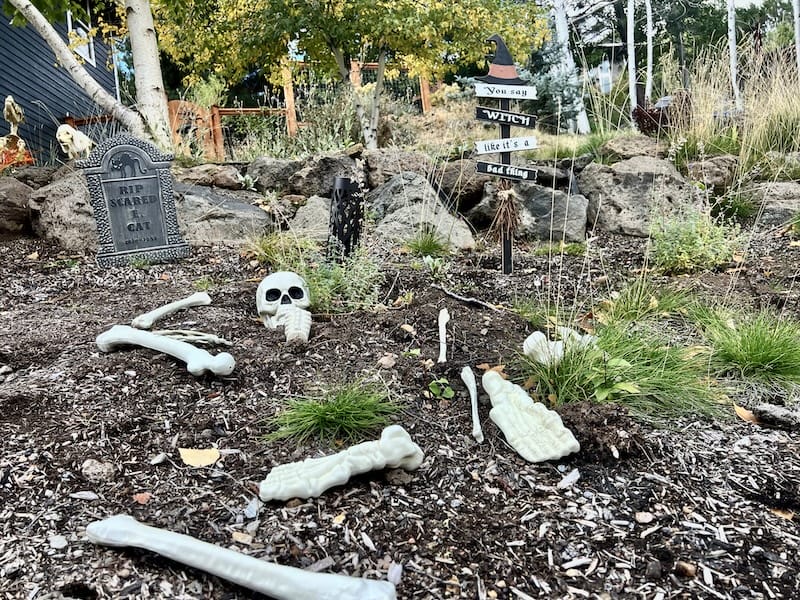
Now bring out the skeleton.
This is the point when cobwebs, bats, ghosts, ravens, spiders, and the rest can join the garden because they only need to be there for a short time.
I actually think waiting makes them more effective.
When every Halloween decoration comes out in September, you almost stop seeing them by October 31.
But when a garden slowly moves into fall and then gets noticeably stranger during the last week of October, Halloween feels like an event.
And because the plants, pumpkins, and natural decorations were already there, you don’t need nearly as much stuff to pull it off.
One skeleton sitting among tall grasses can do a lot of work.
Then Halloween Is Over. Don’t Touch the Pumpkins.
November 1 does not require a complete garden makeover.
Take away the spiders.
Take down the ghosts.
Remove the fake cobwebs, especially anywhere they could entangle wildlife.
Put the skeleton back wherever skeletons spend the other eleven months.
And stop.
Look at what is left.
You should still have pumpkins, gourds, fall flowers, herbs, grasses, lanterns, baskets, branches, and all the wonderful colors that made the garden feel like autumn before Halloween arrived.
You already have the beginning of your Thanksgiving garden.
How do I turn my Halloween garden into a Thanksgiving garden?

Mostly by taking things away.
Halloween likes contrast. Thanksgiving can be quieter.
Group pumpkins together instead of scattering them around the garden. Move baskets closer to the porch. Add natural branches, fall foliage, or pinecones if they are available where you live.
Pots of rosemary and sage are especially nice near an outdoor table or doorway because they are beautiful, useful, and smell like something you might actually be cooking for Thanksgiving.
If some Halloween plants were chosen in deep purple or burgundy, leave them. They do not suddenly stop being beautiful because October ended.
You are not changing seasons.
You are just changing the mood.
Let the Weather Have a Say
There is one problem with planning a beautiful fall garden in September.
October has opinions.
An early frost can change things quickly in colder areas. In warmer climates, the opposite problem can happen. September and October may remain hot enough that traditional cool-season plants struggle.
So watch your own weather rather than the calendar.
If temperatures are still high, wait before buying cool-weather plants just because the garden center has put them by the entrance.
If frost is approaching, decide which containers are worth protecting or moving.
And if one plant doesn’t make it?
Well, there is a pumpkin for that.
What Happens to the Pumpkins After Thanksgiving?
Eventually, even the pumpkins have to go.
If they are unpainted, untreated, and free of candles, wax, and decorations, pumpkins can usually be added to a home compost pile. Cut or break them into smaller pieces, and they will decompose faster.
Just don’t wait until a pumpkin has collapsed into a puddle on the front porch before making this decision.
I say this because pumpkins have a very short period between “charming autumn decoration” and “science experiment.”
If you have wildlife around your garden, don’t automatically toss pumpkins into the yard for animals to eat. Local wildlife recommendations vary, and intentionally feeding wildlife can cause problems.
Composting is the much simpler ending.
Yesterday’s Halloween pumpkin becomes tomorrow’s compost.
That is a pretty good ending for a garden decoration.
A Fall Garden Doesn’t Need Three Complete Makeovers
This is really what I like about creating a Halloween garden this way.
September doesn’t need one garden, October another, and November another.
It is the same garden.
In September, you build the bones with plants, grasses, herbs, containers, and whatever the fading summer garden gives you.
In October, pumpkins and gourds arrive, and things get a little stranger.
During Halloween week, the skeletons and spiders move in.
Then November comes, the creepy stuff leaves, and suddenly you have a warm fall garden that already feels right for Thanksgiving.
No ripping everything apart.
No starting over.
And hopefully no giant plastic skeleton staring through the dining room window while everyone is eating turkey.
Unless, of course, you have become attached to him.
Frequently Asked Questions About Halloween Gardens
When should I start getting my garden ready for Halloween?
Early September is a good time to begin planning because you can concentrate on fall plants, containers, and the overall garden first. Add more obvious Halloween decorations as October 31 approaches.
What can I plant in September for a Halloween garden?

Depending on your climate zone, consider purple pansies, more purple violas, ornamental purple kale and red cabbage (also purple), mums, rainbow Swiss chard, herbs, and ornamental grasses, especially if they are purple. Check your local temperatures and frost dates before planting, as September conditions vary widely across the country.
Can I plant pumpkins in September for Halloween?
Generally, no. Pumpkins require a much longer growing period. Buy pumpkins for this year’s decorations and plan your pumpkin patch earlier next year.
What plants look naturally spooky?
Dark foliage, twisting vines, ornamental grasses, dried flower heads, seed pods and bare branches can all create a slightly eerie garden without actually being Halloween decorations.
How can I decorate for Halloween without disturbing wildlife?
Avoid fake webbing in places where birds and other animals may become tangled, keep decorations secured, and avoid placing hazards around wildlife feeding or nesting areas.
How long will pumpkins last outside?
It depends on temperature, moisture, pumpkin condition, and whether the pumpkin has been carved. Whole pumpkins generally last considerably longer than carved ones, so leave most pumpkins intact if you want them to carry into Thanksgiving.
Can I compost my Halloween pumpkins?
Usually, yes, if the pumpkins are unpainted and haven’t been treated with materials that do not belong in compost. Remove candles, wax, stickers, and decorations first.
What Halloween decorations can stay out for Thanksgiving?
Pumpkins, gourds, baskets, herbs (because don’t we all over-season our Thanksgiving meals?), ornamental grasses, and natural branches from the trees that recently shed their leaves can all transition easily into Thanksgiving. Remove the obviously Halloween-specific pieces like the strobe lights and witch hats, and let the fall garden do the rest.
Share this post
Disclosure: This article may contain affiliate links. If you purchase through these links, The Bright Garden may earn a commission at no extra cost to you.
Table of Contents
- Start Your Halloween Garden in Early September or Mid-August (even better).
- What can I actually plant in September for a Halloween garden?
- And no, September isn’t the time to plant your Halloween pumpkins.
- Before You Clean Up the Summer Garden, Look at It Again
- In Early October, Let the Garden Get a Little Strange
- How do you make a garden spooky without making it look like a Halloween store?
- What should I buy if I want to use it again for Thanksgiving?
- Think About What Your Halloween Garden Looks Like at Night
- Keep the spooky path safe.
- The Week Before Halloween Is When the Spooky Stuff Comes Out
- Then Halloween Is Over. Don’t Touch the Pumpkins.
- How do I turn my Halloween garden into a Thanksgiving garden?
- Let the Weather Have a Say
- What Happens to the Pumpkins After Thanksgiving?
- A Fall Garden Doesn’t Need Three Complete Makeovers
- Frequently Asked Questions About Halloween Gardens
- When should I start getting my garden ready for Halloween?
- What can I plant in September for a Halloween garden?
- Can I plant pumpkins in September for Halloween?
- What plants look naturally spooky?
- How can I decorate for Halloween without disturbing wildlife?
- How long will pumpkins last outside?
- Can I compost my Halloween pumpkins?
- What Halloween decorations can stay out for Thanksgiving?
About the Author

Nicole Stark
Nicole started The Bright Garden after years of hands-on learning in her own backyard, where she fell in love with healthy soil, native plants, and gardening the natural way. She shares honest, experience-based tips and enjoys time outdoors — gardening, fishing, and slow living with family. Gardening style: Organic, a little wild, always evolving. Current favorites: Worm bins, pollinator plants, backyard dinners.
Explore More
Free gardening tools, finders and interactive guides to help you grow better.