

How to Grow Hollyhocks for Tall, Healthy Summer Blooms
A practical, hands-on guide to planting, watering, rust prevention, variety selection, companion planting, and seed saving.
Why hollyhocks are worth growing
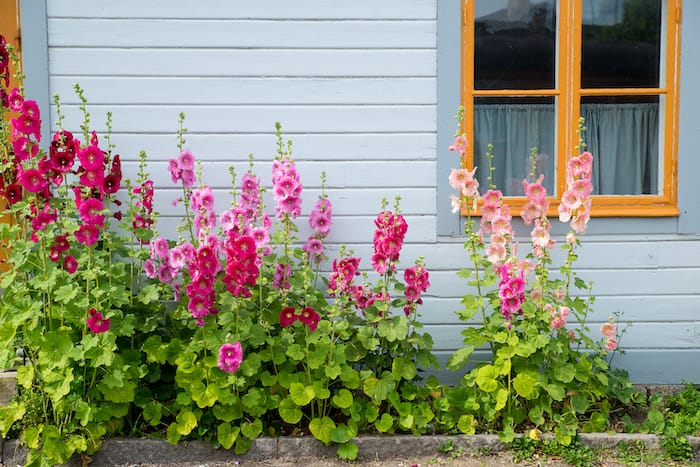
Few flowers can soften a plain fence, fill the back of a border, and bring this much old-fashioned summer character without taking over the whole bed.
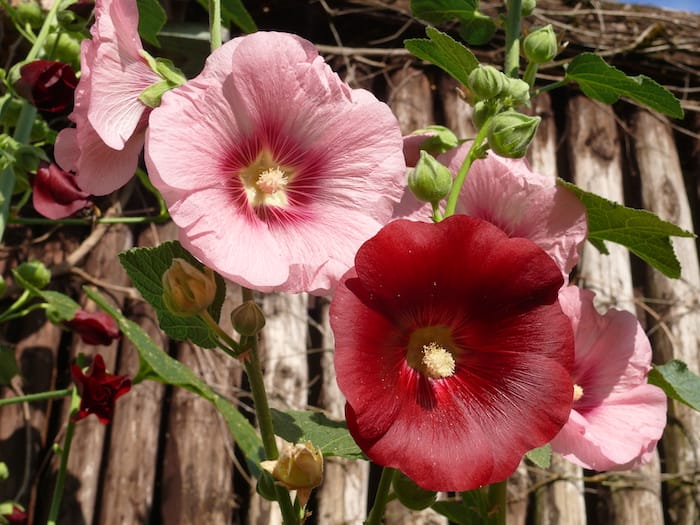
Hollyhocks are a great choice when you want height, color, and a little cottage-garden charm. Their flower stalks rise above most neighboring plants, opening from the bottom upward in shades of white, peach, pink, red, yellow, purple, and deep burgundy.
Their height is the first thing people notice, but it is not the only reason to grow them. Bees often disappear inside the open flowers, collecting pollen as they work their way up the stalk. Butterflies and hummingbirds may visit too. On a warm morning, one blooming plant can feel like its own little neighborhood.
Hollyhocks also teach patience. Many spend their first year building roots and leaves, then bloom during their second season. Once they begin dropping seed, new plants may appear nearby and quietly keep the display going.
Annual, biennial, or perennial?
The answer depends on the variety, your climate, and whether the plant reseeds itself.
The common two-year pattern
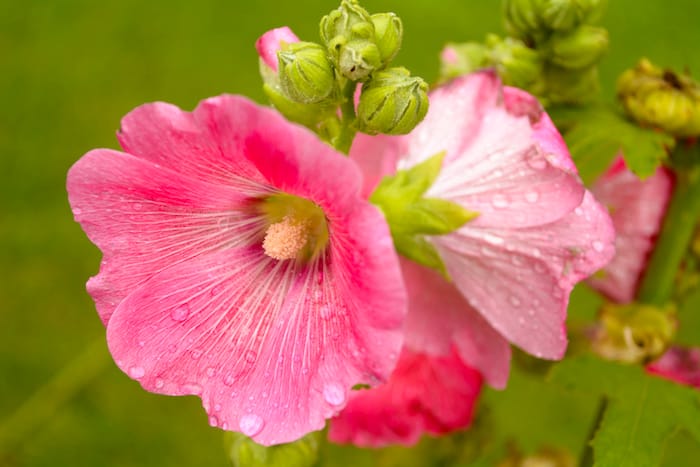
During year one, the plant makes a leafy rosette and develops its root system. During year two, it sends up a flower stalk, blooms, and produces seed. If your first-year plant is all leaves, it may be doing exactly what it should.
Some plants return
In favorable conditions, certain hollyhocks live and bloom for more than two years. Even then, they are usually not as long-lived as peonies, daylilies, or other dependable garden perennials.
Why the planting seems permanent
Hollyhocks often drop plenty of seed. New plants replace older ones, so the patch appears to return forever even though the individual plants may be changing from year to year.
Planting hollyhocks where they can thrive
Sun, drainage, and airflow matter more than fancy fertilizer or constant fussing.
Build a simple hollyhock planting timeline
Enter your expected last frost and planting date to create a practical first-season schedule.
Choose two dates to generate your timeline.
Water deeply, feed lightly, and stake early
Once established, hollyhocks usually need less attention than their size suggests.
Watering
Newly planted hollyhocks need steady moisture while their roots become established. After that, deep watering is better than a quick daily sprinkle. Around one inch per week from rain and irrigation is a useful starting point, but hot weather, wind, containers, and sandy soil can increase the need.
Water around the base whenever possible. Wet leaves, especially overnight, make fungal problems easier to spread.
Fertilizer
Plants growing in compost-rich soil may need little extra feeding. If the soil is poor, use a balanced slow-release fertilizer in spring. Too much nitrogen often gives you enormous leaves and fewer flowers.
Staking and deadheading
Tall stalks may need support in windy spots. Add stakes before the plant reaches full height. Deadhead faded flowers for a tidier look and potentially more bloom, but leave a few pods if you want seed.
Care balance at a glance
These are practical care priorities, not measured scientific scores.
How to manage hollyhock rust without panicking
Rust is common, frustrating, and usually manageable when you catch it early and keep the bed clean.
What to look for
- Small yellow spots on upper leaf surfaces
- Orange or brown bumps underneath leaves
- Damage that begins low and moves upward
- Leaves that yellow, dry, and drop early
What helps most
- Remove affected leaves promptly
- Water at soil level
- Improve spacing and airflow
- Clean fallen foliage from the bed
- Cut back badly affected stalks after flowering
Which hollyhock fits your garden?
Answer three quick questions and get a practical starting recommendation.
How much space do you have?
What flower style do you prefer?
What matters most?
Popular hollyhock varieties compared
Mature height varies with climate and growing conditions, but this chart gives you a useful planning range.
| Variety | Height | Flower type | Best reason to grow it |
|---|---|---|---|
| Chater's Double | 5-7 feet | Large double blooms | Classic cottage-garden fullness |
| Indian Spring | 5-7 feet | Single and semi-double | Easy seed-grown display |
| Nigra | 5-6 feet | Single, dark burgundy | Dramatic contrast |
| Halo Series | 5-6 feet | Single with bold centers | Pollinator-friendly color |
| Queeny Purple | 2-3 feet | Double purple blooms | Small beds and containers |
| Majorette Mix | 2-4 feet | Semi-double and double | Compact spaces |
| Blacknight | 5-6 feet | Deep purple-black single | Moody garden color |
| Creme de Cassis | 5-6 feet | Ruffled single and semi-double | Unusual raspberry tones |
Companion plants that make hollyhocks look better
Shorter plants hide tired lower leaves, fill open soil, and create a more natural layered border.
Soft, cottage-style companions
Roses, catmint, hardy geraniums, daisies, foxgloves, and lavender create the kind of loose, overflowing look hollyhocks naturally suit.
Pollinator-friendly companions
Salvia, coneflowers, yarrow, coreopsis, and low ornamental grasses keep the bed lively while adding different flower shapes and bloom times.
Common hollyhock problems and what to do
Most trouble comes down to moisture, airflow, pests, or expecting too much from a first-year plant.
| Problem | What it looks like | Likely cause | What helps |
|---|---|---|---|
| Rust | Yellow spots and orange-brown bumps | Fungal disease | Remove leaves, improve airflow, water low |
| Aphids | Clusters of small insects and sticky leaves | Sap-feeding pests | Water spray, beneficial insects, soap if needed |
| Japanese beetles | Ragged or skeletonized leaves | Adult beetle feeding | Handpick early and monitor often |
| Spider mites | Speckled leaves and fine webbing | Hot, dry stress | Rinse foliage and reduce plant stress |
| Leaning stalks | Tall stems bending or falling | Wind or heavy blooms | Stake early and avoid excess nitrogen |
| No flowers | Healthy leaves but no stalk | First-year growth or low light | Be patient and provide full sun |
How to save hollyhock seeds
Seed saving is easy, inexpensive, and one of the nicest ways to carry a favorite flower into another season.
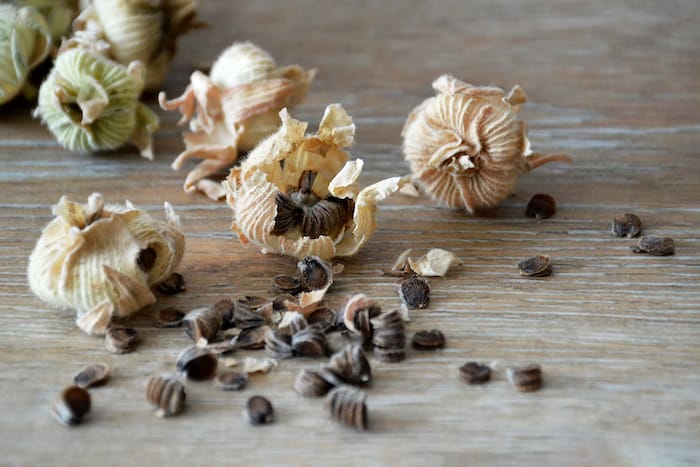
Allow several pods to mature on the plant. They will change from green to brown and become dry around the edges. Collect them on a dry day and open them over a tray or sheet of paper.
The flat seeds sit inside the pod like slices around a tiny wheel. Let them dry thoroughly, then place them in a labeled paper envelope in a cool, dry location.
Seeds from hybrid plants may not look exactly like the parent. I see that as part of the fun. A little variation keeps the garden from feeling like it came out of a catalog.
Frequently asked questions about growing hollyhocks
These are the questions gardeners most often ask before planting or when something looks a little off.
How long does it take hollyhocks to bloom?
Do hollyhocks come back every year?
How tall do hollyhocks grow?
Can hollyhocks grow in partial shade?
Why are my hollyhock leaves turning yellow?
Should hollyhocks be cut back after flowering?
Can hollyhocks grow in containers?
Do deer eat hollyhocks?
Give them sun, good soil, room to breathe, and a little patience.
Hollyhocks are not perfect plants, and that is part of their charm. A little rust, a stalk leaning after a storm, and a volunteer seedling in an unexpected corner all remind us that a garden is alive. On a quiet summer morning, when the bees are working their way up the flowers, you may find yourself standing there longer than planned.