
Why Your Compost Isn’t Heating Up (7 Fixes That Actually Work)
 Written by
Composting Soil & Compost
If your compost pile feels like a cold lump instead of a slow burn, something’s off.
There’s a little secret nobody tells you when you start composting. When it works, it feels like magic. Real heat. Steam when you turn it on on a cool morning. That rich, forest-floor smell that makes you think you’ve cracked some ancient code.
When it doesn’t? It just sits there like a sulking tweenager.
And if you’ve ever lifted the lid expecting warmth and found… nothing… You know that small sinking feeling. Because hot compost is where the good stuff happens. Faster breakdown. Fewer smells. Fewer pests. Better finished compost.
You need heat and time to turn table scraps into that dark, crumbly gold. Miss the heat, and you’re basically slow-rotting leftovers in a box.
I’ve composted more stalled piles than I care to admit. I’ve also had piles that got so hot they scared me a little. The difference usually comes down to a handful of simple things.
First, what “hot” actually means
It’s not about cooking. It’s about microbes working overtime.

A hot pile usually climbs into the 130–160°F range. That’s not random. That’s microbial activity going full throttle. According to the EPA and several university extension programs, that temperature range speeds decomposition and helps knock back weed seeds and pathogens.
But here’s the part that matters more than the number on a thermometer: heat means balance.
When compost doesn’t heat, it’s almost always because something is out of balance.
Let’s walk through the usual suspects.
1. The greens and browns aren’t playing nice
If it looks like a salad bowl, it probably won’t heat.
Kitchen scraps are “greens.” They’re rich in nitrogen. Dry leaves, shredded cardboard, and straw. Those are “browns.” Carbon.
If you toss in mostly vegetable scraps and coffee grounds, you’ll get a wet, compacted pile that smells sour and stays cool.
If you dump in mostly dry leaves, it’ll sit there like a pile of autumn memories.
I aim for roughly two to three parts brown to one part green by volume. Not measured with a scale. Just eyeballed. If I add a bucket of scraps, I follow with a thicker layer of dry leaves or shredded paper.
When I get lazy about that, the pile tells on me.
2. It’s too small to hold heat
A tiny pile leaks warmth faster than it can build it.
Microbes generate heat. But they need insulation. A pile smaller than about three feet wide and three feet tall struggles to hold its temperature.
I learned that the hard way one year in early spring. I had enthusiasm and a five-gallon bucket of scraps. That was about it.
Once I started building piles with real mass, things changed. Compost behaves a lot like a wood stove. Too small, and it never really gets going.
3. It’s bone dry
Microbes need moisture, too.
Compost should feel like a wrung-out sponge. Damp, but not dripping.
If it’s dusty and dry in the middle, the microbial party shuts down, especially in summer. I’ve opened piles in August that looked fine from the outside but were dry as toast inside.
Now I check the center when I turn it. If it’s dry, I water as I rebuild the pile.
Not flood. Just moisten.
4. It’s drowning
Wet and compacted is just as bad.
On the flip side, too much water squeezes out air. And without oxygen, you don’t get hot compost. You get slow, smelly decomposition.
If your pile smells like rotten eggs, that’s a sign it’s gone anaerobic. The USDA and several land-grant universities note that oxygen is essential for aerobic composting, which produces heat.
Turning the pile fixes this more often than not. Fluff it up. Break apart clumps. Add dry browns if it’s soggy.
5. You’re not turning it
Heat drops when oxygen runs out.

In an active hot pile, oxygen gets used up fast. Turning reintroduces air and redistributes materials, allowing microbes to keep working.
I used to think turning was optional. It isn’t, if heat is your goal.
Every time I turn a sluggish pile and rebuild it properly layered, it usually heats within a day or two. Steam rising like it’s proud of itself.
6. The pieces are too big
Microbes can’t chew what they can’t reach.
Whole corn cobs. Thick carrot tops. Big chunks of squash.
They’ll break down eventually. But slowly.
Chopping scraps smaller increases surface area. Same with shredding leaves. It feels like extra work in the moment. But it shortens the timeline dramatically.
I learned this after comparing two piles one fall. One built with shredded leaves. One with whole leaves. The shredded pile heated fast and finished early. The other just… lingered.
7. The weather is working against you
Cold air steals heat.
In winter or early spring, even a well-built pile struggles. Insulation helps. A tarp. Straw around the sides. Building the pile larger than usual.
Sometimes, though, you just accept that it will move more slowly. Compost has its own rhythm. You can nudge it. You can’t bully it.
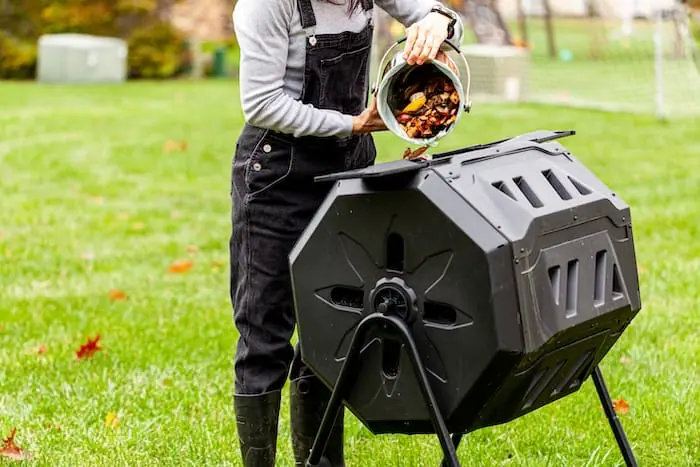
And this is where those store-bought composters earn their keep. I’ve used the basic tumblers and the double-barrel kind, and I’ll admit, they’re convenient, especially the double barrel. Everything’s contained. You turn a handle instead of wrestling a fork through a heap. The double-chamber ones make a lot of sense once you get the hang of them. One side is the “active” side, where you keep adding scraps and give it a spin every few days. The other side is closed off, just turning and quietly finishing. No new material going in. It’s a tidy system, especially if you don’t have space for a big three-foot pile. They don’t always get as hot as a large open heap, especially in colder weather, but if it is really cold, then you are likely not going to be using the compost til the weather warms up and the frost is gone. Still, for steady, controlled composting without a mess, they’re hard to beat.
A quick word about patience
I’ve experimented with all kinds of systems. Tumblers. Open bins. Even small-scale vermicomposting. Each one behaves differently.
Hot composting is fast and satisfying. But it demands attention. Time. Observation.
Cold composting works too. It just asks for patience instead of precision.
And here’s the quiet truth. Even seasoned gardeners tweak their approach year after year. Gardening is booming because people want to reconnect with their soil, but soil still plays by its own rules.
You learn by watching. By touching the center of the pile. By noticing smells.
Compost teaches you to slow down and pay attention. Honestly, the lesson is the bigger gift, but the result of great compost is a very nice bonus.
FAQ
Quick answers for when your pile is acting weird (or suspiciously quiet).
How long should it take for compost to heat up?
If your ratios and moisture are right, a well-built pile can heat within 24 to 72 hours. Peak temps usually show up in the first week. If nothing happens after several days, something’s off — usually moisture, airflow, or not enough “greens.”
Do I need a compost thermometer?
It helps, especially if you’re aiming for hot, pathogen-killing temps. But your hand works too. If the center feels warm or hot when you dig in, activity is happening.
And if worms and insects are up your heebie-jeebies lane… yeah, get the thermometer.
Can I compost in winter?
Yes — expect slower progress. Composting keeps going in cold weather, just at a reduced rate. Bigger piles and a little insulation help hold heat so the microbes can keep doing their thing.
Why does my compost smell bad?
That usually means too much moisture and not enough air. Turn it. Add browns. Let oxygen back in.
Too wet and slimy compost almost never becomes “toxic” in the way people fear. It becomes anaerobic — it ran out of oxygen.
If your pile isn’t heating right now, don’t scrap it. Adjust it. Compost is forgiving. It’s a long conversation between you and the soil.
And when you finally open a pile and see steam curling up into cool morning air, you’ll know. That’s the moment you realize the scraps were becoming something alive all along.
Share this post
Table of Contents
- If your compost pile feels like a cold lump instead of a slow burn, something’s off.
- First, what “hot” actually means
- It’s not about cooking. It’s about microbes working overtime.
- 1. The greens and browns aren’t playing nice
- If it looks like a salad bowl, it probably won’t heat.
- 2. It’s too small to hold heat
- A tiny pile leaks warmth faster than it can build it.
- 3. It’s bone dry
- Microbes need moisture, too.
- 4. It’s drowning
- Wet and compacted is just as bad.
- 5. You’re not turning it
- Heat drops when oxygen runs out.
- 6. The pieces are too big
- Microbes can’t chew what they can’t reach.
- 7. The weather is working against you
- Cold air steals heat.
- A quick word about patience
- FAQ
About the Author

Nicole Stark
Nicole started The Bright Garden after years of hands-on learning in her own backyard, where she fell in love with healthy soil, native plants, and gardening the natural way. She shares honest, experience-based tips and enjoys time outdoors — gardening, fishing, and slow living with family. Gardening style: Organic, a little wild, always evolving. Current favorites: Worm bins, pollinator plants, backyard dinners.
Interactive Guides


All categories
More From The Garden
Disclosure: This post may contain affiliate links. That means if you click and buy, The Bright Garden may earn a small commission, at no extra cost to you. We only recommend products we’ve vetted and believe will benefit our readers.