
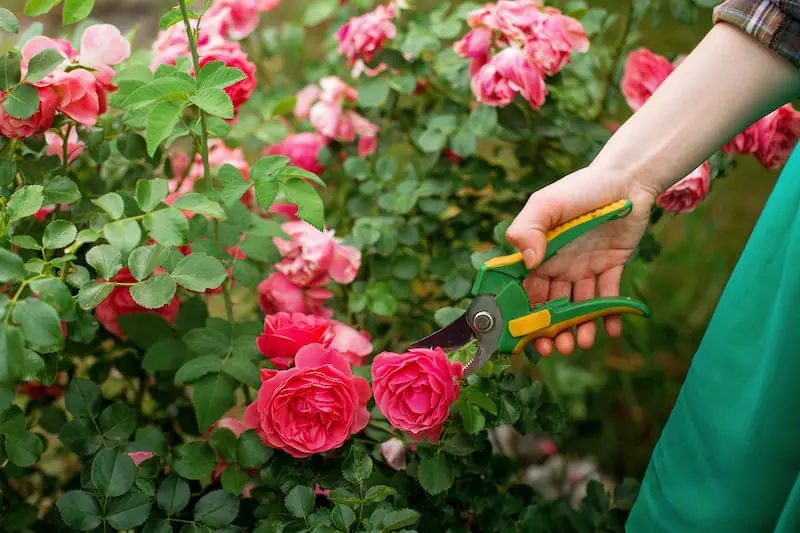
Interactive Rose Guide
Our guide features a searchable database where you can filter roses by hardiness zone, season, or category. It offers detailed modals for every rose plant, care calendar, pruning guide, and an FAQ.
✦ The Complete Rose Grower's Reference ✦
The Rosepedia
Hybrid Teas · English Roses · Climbers · Old Garden Roses · Care Calendar · Pruning Guide
❧ ❧ ❧
0Total Varieties
0Showing
0Repeat Bloomers
0🏆 Award Winners
0♥ Favorited
Rose Care Calendar
Month-by-month tasks for healthy, beautiful roses. Adjust 2–4 weeks based on your local climate and hardiness zone.
Rose Pruning Guide
The right pruning technique depends entirely on the rose type. Here's how to handle each one correctly.
Hybrid Tea & Grandiflora
- When: Early spring, just as forsythia blooms or buds begin swelling. In zones 7+, late January to February.
- How hard: Hard prune — cut to 12–18 inches, leaving 3–6 strong outward-facing canes.
- Remove all dead, damaged, or crossing canes at the base. Cut just above an outward-facing bud eye.
- Cut at a 45° angle slanting away from the bud to shed rain and reduce disease.
- Seal large cuts with white glue to prevent cane borers from entering.
- Summer: Deadhead to the first 5-leaflet leaf below the spent bloom, cutting just above an outward-facing leaf.
Floribunda & Polyantha
- When: Same timing as hybrid teas — early spring as buds swell.
- How hard: Moderate prune — cut to 18–24 inches, slightly less severe than hybrid teas.
- Keep more canes than you would on hybrid teas; floribundas bloom on short new growth from many stems.
- Remove the oldest, thickest woody canes at the base to stimulate new growth.
- Deadhead individual spent blooms within a cluster; remove the whole truss once all flowers have faded.
- Light shaping is fine in summer; avoid cutting back heavily before the fall flush.
English / David Austin Roses
- When: Early spring, same as other modern roses.
- How hard: Light to moderate — reduce by one-third to one-half. They benefit from height to arch gracefully.
- Remove all dead wood and crossing stems. Thin out congested centres to improve airflow.
- Taller English roses (like Graham Thomas) benefit from being left at 3–5 feet for the most spectacular flowering.
- Shorter, compact types (like Olivia Rose Austin) can be pruned harder for bushier growth.
- Deadhead regularly during bloom, or leave late season hips for wildlife interest.
- Important: Don't hard prune climbers — they bloom on old wood (previous year's growth).
- Year 1–3: Don't prune at all. Simply train horizontal canes along a support structure.
- After flowering, remove spent lateral shoots back to 2–3 leaves from the main cane.
- In autumn, tie in new long canes horizontally — horizontal training produces dramatically more blooms.
- Every 3–4 years, remove 1–2 of the oldest canes at the base to encourage vigorous replacement canes.
- Repeat-flowering climbers like New Dawn can have laterals deadheaded for a second flush.
Rambling Roses
- When: Immediately after flowering (midsummer), NOT in spring.
- Ramblers bloom on the previous year's canes — spring pruning removes all your flowers.
- After flowering, cut flowered canes back to the base or to a strong low side shoot.
- Tie in new canes to replace them — these will carry next year's flowers.
- If the plant is healthy and vigorous, some old canes can be left for 2 years before removing.
- Once-blooming ramblers need very little pruning beyond removing dead wood and thinning congestion.
Old Garden Roses
- Old Garden Roses vary hugely. Once-blooming types (many gallicas, albas) should be pruned after flowering, not in spring.
- Repeat-blooming types (bourbons, Portlands, some damasks) are pruned in early spring like modern roses.
- Gallicas sucker freely — remove suckers from below the bud union promptly.
- Most old roses only require light shaping rather than hard pruning. They resent being cut back severely.
- Rugosa roses need minimal pruning — just remove dead wood and occasionally thin to improve airflow.
- Species roses: thin only — they bloom on old wood and should not be hard pruned.
Miniature Roses
- Prune miniatures in early spring using the same principles as hybrid teas, but scaled down.
- Cut back to 6–8 inches in cold climates; 8–12 inches in mild climates.
- Use precision tools — small, sharp scissors or microtip pruners work better than standard loppers.
- Remove dead, twiggy wood and any canes thinner than a pencil lead.
- Deadhead faithfully — miniatures bloom prolifically when deadheaded regularly.
- In containers, repot every 2 years with fresh mix to keep plants vigorous.
Shrub & Groundcover Roses
- Many modern shrub roses (Knock Out, Flower Carpet) are designed to be very low maintenance.
- Light pruning in early spring — simply reduce overall size by one-third if desired.
- Remove any dead or damaged wood. These roses are very forgiving if you want to shorten them significantly.
- Knock Out types can be cut to 12 inches without harm — they'll regrow vigorously.
- Groundcover roses rarely need pruning; use shears to tidy edges if they spread too far.
- Deadheading is optional on self-cleaning types that drop petals and reset naturally.
🛠️ Essential Pruning Tools
Good tools make the work easier and produce cleaner cuts that heal faster.
✂️ Bypass Pruners
The most important tool. Bypass (scissor-action) cuts are cleaner than anvil types. Sharpen before each season.
🪚 Loppers
For canes thicker than ¾ inch. Long handles give leverage without straining. Keep sharp for clean cuts.
🔪 Folding Pruning Saw
For very old, thick canes at the base of established climbers and old garden roses.
🧤 Thick Gauntlet Gloves
Rose thorns penetrate standard garden gloves. Long gauntlet-style leather gloves protect your wrists and forearms.
🧴 Disinfectant Spray
Wipe blades with methylated spirits or a 10% bleach solution between plants to avoid spreading disease.
🖌️ Pruning Sealant
Apply white wood glue or proprietary pruning paste to cuts over ½ inch diameter to deter rose cane borers.
Rose Growing FAQ
Answers to the most common questions about growing beautiful, healthy roses — from first-time growers to experienced enthusiasts.
📝 Growing Notes
📊 At a Glance
💡 Expert Tip
🌿 Companion Plants
📍 Bloom times, vigor, and disease resistance vary with local climate, soil, and care. These ratings reflect average garden conditions.