Living Christmas Trees: A Practical, Conservation-Friendly Swap
I did the usual holiday loop this year—wander a few tree farms, pick the one that feels right, talk myself into believing it’ll somehow stay tied to the roof the whole way home.
What caught me off guard wasn’t the trees. It was the prices.
Some of the cut trees were more expensive than the live potted tree I stumbled upon afterward. And my gardener brain chimed in with that annoying-but-true logic: So…the already-cut one costs more than the one that still has roots?
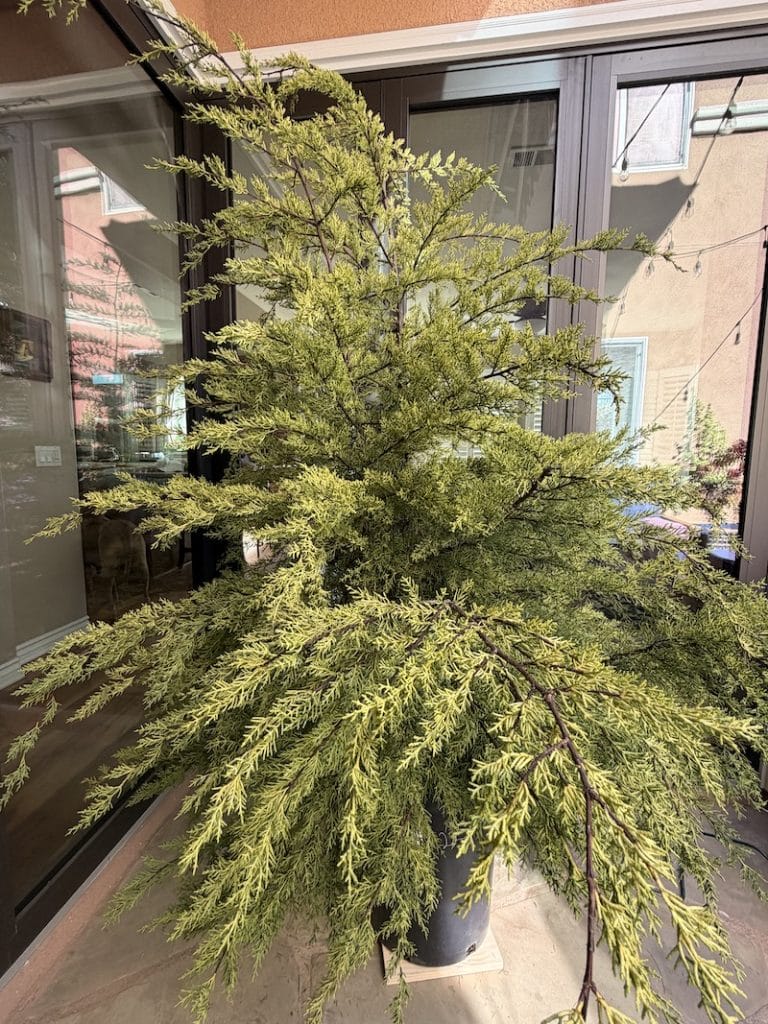
So we brought home the live one. A Golden Monterey Cypress (Hesperocyparis macrocarpa ‘Fine Gold’), bright and cheerful in that way only young conifers manage. And the longer it sat on my patio waiting for its big indoor debut, the more it felt like one of those rare swaps that’s both practical and a small conservation win—if you treat it like a real plant, not a seasonal prop.
Why a Living Christmas Tree Makes Sense (Beyond the Warm Fuzzy Feelings)
Cut trees aren’t the bad guys. They’re farmed, renewable, and create plenty of seasonal jobs. But they’re still a single-use item, grown for years and enjoyed for a couple of weeks.
A living tree, though? Totally different future ahead of it.
If you keep it alive and move it back outside after the holidays, it keeps doing tree things:
storing more carbon each year
cooling and cleaning the air around your house
holding soil in place
giving birds a place to perch and hide
offering year-round greenery instead of two weeks of sparkle
That’s the whole conservation argument in one sentence: a living tree can keep living.
Less Holiday Waste (Especially Where Tree Recycling Isn’t Great)
Some cities chip Christmas trees into mulch and compost. Others…well, let’s just say curbside pickup can turn into a long goodbye as trees sit around waiting for the right truck.
A living Christmas tree simply avoids the whole “What bin does this go in?” situation—as long as it survives. If it ends up planted or kept in a container outdoors, nothing gets tossed.
A Little Patch of Habitat, Right in Your Yard
Even a modest evergreen becomes a tiny sanctuary—especially in suburban neighborhoods where birds live between fences, gutters, and whatever shrubs survived the summer.
Keep a living Christmas tree long-term and you’re giving wildlife:
shelter from wind and rain
a perch to watch for insects
a quiet place to tuck into at night
a bit of shade and softness in a yard that might otherwise be hardscaped
Caveat: It Only “Counts” If You Keep It Alive
Here’s the part people skip because it doesn’t fit nicely under a photo of matching pajamas:
A living Christmas tree is the greener option only if it stays alive.
If it dries out indoors or gets shoved onto a hot patio afterward and dies, you’ve basically bought a cut tree with extra steps. So think of it as an outdoor plant visiting your living room for a short holiday stay.
How to Keep a Living Christmas Tree Alive Indoors
Give It the Brightest, Coolest Spot You’ve Got
South or west window if possible
Away from heat vents or fireplaces
Ideal indoor temps: Around 65°F, and if your house runs warmer, don’t panic—a short stretch at 70–74°F is usually okay, especially if it’s getting bright light and the soil isn’t drying out.
Warm, dry indoor air is what takes these out fast.
Watering: The Make-or-Break Part
Indoor air pulls moisture out of pots like you wouldn’t believe.
Check soil daily
Water when the top 1 inch is dry
Water deeply and empty the saucer afterward
And the simplest trick: lift the pot. If it suddenly feels suspiciously light, water.
Don’t Keep It Inside Too Long
This is where most people push their luck.
7–10 days indoors is the sweet spot
Two weeks max before stress starts stacking up
After that, the tree starts thinking it’s in trouble.
Reintroduce It to the Outdoors Gently
Don’t yank it from cozy living room → cold wind and nighttime temps.
Give it 3–7 days in a protected, shady spot first
Then move it to its normal outdoor location
Up here in North County San Diego, the transition is usually easy thanks to our mild winters—but colder climates will need slower adjustments.
My Golden Monterey Cypress
After Christmas: Patio Tree or Future Yard Tree?
This is the part I enjoy most—when the holiday decoration becomes a real plant with a life ahead of it.
Keeping It in a Pot Long-Term
Monterey cypress makes a surprisingly good container plant here:
Must have a drain hole
Water when the top 1–2 inches are dry
Warm spells = 2–4x/week watering
Cool months = maybe weekly
Up-pot every year or two, or root-prune later on
In a pot, it usually stays 4–8 feet instead of shooting up wildly.
Planting It in the Ground
Give it:
space for 8–12 feet tall and 4–6 feet wide
good drainage
enough room so you’re not pruning it into a cube someday
Keeping Its Gold Color Bright
‘Fine Gold’ glows best with decent light.
Too much shade → greener and leggier
Too much reflected heat → scorched tips
Morning sun with some afternoon shelter is a great fit for most coastal and near-coastal yards.
Light Pruning Only
Small tip-pruning in spring/early summer keeps it dense.
Just avoid cutting into the old brown wood—most conifers hold grudges about that.
Why I’m Sold on Living Christmas Trees
Nobody needs guilt around the holidays. We all pick the traditions that make sense for our homes and our budgets.
But when a living tree costs the same—or less—than a cut one, it starts feeling like a pretty good trade: you get the lights, the ornaments, the evergreen scent… and then you get a plant that keeps offering shade, shelter, color, and a bit of habitat long after December ends.
“`html
Holiday Tree Help
Why a Living Christmas Tree Makes Sense: FAQ
Lower waste · Reusable · Backyard-friendly
Thinking about a living Christmas tree instead of a cut one? This covers the real questions: why it’s a conservation win (when done right), how to keep it alive indoors, and what to do with it after the holidays.
It can be—if you keep it alive. A cut tree can still be a responsible choice (especially if it’s local and gets chipped into mulch), but it’s also a one-season item. A living tree has a chance to keep doing tree things: growing, storing carbon, cooling your space, and providing shelter for birds.
The “conservation win” comes from follow-through: keep the indoor time short, don’t let it dry out, and have a real plan for where it lives outside after Christmas.
Best for: people who’ll keep it aliveBiggest factor: after-holiday careBonus: reuse next year
Think “short visit,” not “new houseplant.”
7–10 days indoors is ideal.
Up to ~2 weeks is usually the max before stress starts stacking up.
Indoor heat + dry air are the main issues. If it’s near a vent or fireplace, even a week can be rough.
Name: ‘Fine Gold’Size: 8–12′ tallSun: full / part shade
If you want flexibility and a smaller tree, keeping it in a pot is totally fine—just expect to up-pot eventually or do root pruning down the road. If you plant it in the ground, it’ll grow into its mature size sooner and look more like a true landscape tree.
In a mild coastal climate, these usually do great outside as long as they get sun and the soil drains well.
Pot: easier size controlGround: faster growthKey: good drainage
Yes—just keep it gentle. Think light tip-pruning (a haircut), not hard chopping. Most conifers don’t reliably push new growth from old brown wood.
Best timing is usually spring into early summer. A couple small trims helps it stay fuller and more “tree-shaped.”
Style: light trims onlyTiming: spring / early summerAvoid: cutting into brown wood
Paul Stark is one of the gardeners behind The Bright Garden, where he shares hands-on, honest advice for growing with nature. A passionate conservationist, Paul has planted over 100,000 trees in Madagascar to help fight deforestation. He’s also a former marine mammal rescuer. These days, you’ll find him in the garden with dirt under his nails, growing seedlings.
Disclosure: This post may contain affiliate links. That means if you click and buy, The Bright Garden may earn a small commission, at no extra cost to you. We only recommend products we’ve vetted and believe will benefit our readers.
{% if featuredImage and featuredImage != "" %}
{% endif %}
{% if excerpt %}