
The Gardener’s Trick of Tree Grafting - One Tree, Multiple Fruits
 Written by
Trees & Shrubs
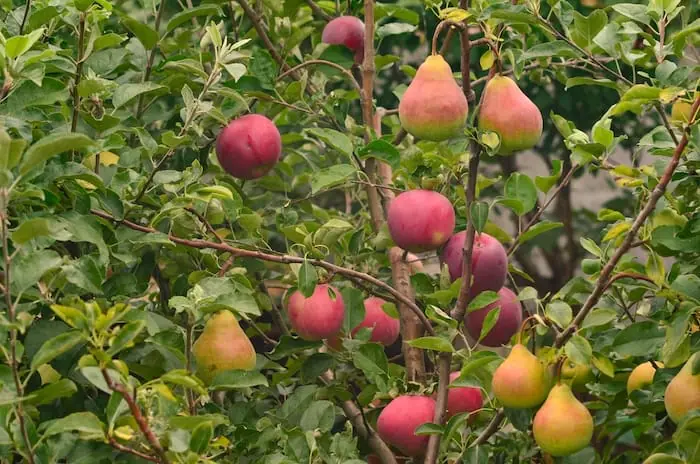
Most gardeners eventually stumble across a trick that feels almost too good to keep quiet – Tree Grafting. Growing several fruits on one tree through propagation and grafting is one of those delightful surprises, and once you understand how it works, it opens up a whole new way of thinking about fruit trees. In this article, we’ll explore how gardeners combine different fruits onto a single tree, why these “fruit family trees” work so well in smaller yards, what kinds of fruits can share the same root system, and a few lessons learned from trial and error when trying it yourself.
The first time I saw one in a backyard garden, I stood there counting the fruit as I’d just discovered the tree equivalent of a Swiss Army knife (a small Swiss Army knife with maybe 3-5 tools inside). The tree grew in the front yard of a house I often admired on walks with my husband, and one day I asked the homeowner whether they were secretly swapping out fruit at night just to mess with visitors. This made the homeowner chuckle, and we had a lovely conversation where I learned that it was simply good grafting. Once you see how it’s done, the whole idea makes perfect sense, so let’s take a closer look at how gardeners turn one tree into an entire fruit family.
How Can One Tree Grow Several Different Fruits?
The short answer is grafting.
Instead of planting a separate tree for every fruit you want, gardeners attach branches from different fruit trees onto one healthy base tree called the rootstock. The roots feed the whole tree, while each grafted branch keeps its own fruit identity.
It’s a little like plugging several lamps into one power strip. The electricity comes from the same place, but each lamp shines its own light.
For this to work, the fruits need to be closely related. Plants in the same botanical family are most likely to share a root system.
Stone fruits are the classic example. Many gardeners combine:
- Peaches
- Plums
- Nectarines
- Apricots
These fruits belong to the Prunus family, which means their tissues are compatible enough to grow together when grafted. According to the University of California Agriculture and Natural Resources program, grafting succeeds because the vascular tissues of related plants can fuse together and share water and nutrients once the graft heals.
Once that connection forms, the tree behaves as a single organism.
The peaches still taste like peaches. The plums still taste like plums. But they’re all drawing from the same roots.
Why Gardeners Love Fruit Family Trees
If you’ve ever tried squeezing fruit trees into a backyard garden, you already know space becomes the limiting factor.
A fruit family tree solves that problem nicely.
Instead of planting four separate trees, you grow one trunk with several varieties attached. The roots only need one spot in the yard, but the harvest feels like a mini orchard.
A longer harvest season
Different fruits ripen at different times.
One branch might produce plums in early summer while another branch offers peaches later in the season. That single tree keeps you visiting the garden for weeks.
Better pollination
Some fruit trees benefit from nearby varieties. Having several compatible branches on the same tree can help with pollination and fruit production.
A backyard conversation starter
Visitors notice these trees immediately.
Someone usually stops and squints at it for a moment before asking, “Wait… are those two different fruits?”
That moment never really gets old.
How the Propagation Actually Happens
There are several ways gardeners graft fruit trees, but the main idea stays the same. A piece of one tree becomes part of another.
Two common approaches are used in home orchards.
Bud grafting

A single bud from one tree is inserted under the bark of another tree. If the graft heals successfully, that bud grows into a new branch that produces its own fruit.
This method is commonly used in commercial orchards because it requires very little plant material.
Scion grafting

A short twig called a scion is attached to a cut branch on the rootstock tree. The gardener wraps the joint to keep the tissues pressed together while they heal.
The key to success is aligning the cambium layers, the thin green layer just under the bark, where growth happens. When those layers connect, water and nutrients begin moving between the two plants.
The USDA National Agricultural Library explains that this vascular connection is what allows the grafted branch to survive and grow as part of the host tree.
Once the graft heals, the branch becomes a permanent member of the tree.
Nature is surprisingly cooperative when you give it the right conditions.
A Few Lessons I Learned the Hard Way
When I first started experimenting with propagation, I thought grafting would be an all-or-nothing kind of project. It turns out trees have their own pace and personality. Some grafts take off immediately and push out new growth within weeks. Others sit there quietly for months before deciding they’re ready to grow.
Timing makes a difference. Late winter and early spring are the most forgiving seasons because trees are waking up but not yet pushing heavy growth.
Clean cuts matter too. A sharp knife gives the plant tissues the best chance to knit together.
But patience may be the biggest lesson of all. Gardening teaches you to start something carefully and then step back a little. The tree does the rest.
Can You Buy Trees That Already Have Multiple Fruits?

Yes, and they’re becoming easier to find.
Many nurseries now sell what are often called fruit salad trees or multi-grafted fruit trees. These arrive with several fruit varieties already grafted onto one trunk.
They’re especially popular for:
- Small yards
- Patio orchards
- Raised bed gardens
- Urban spaces with limited room
Buying one of these trees lets you enjoy the idea right away without needing to learn grafting tools first.
Later on, curious gardeners sometimes try adding a new graft themselves. Once the idea clicks, it’s hard not to experiment a little.
That’s how many of us learn in the garden anyway.
Keeping a Fruit Family Tree Balanced
One small challenge comes with growing several fruits on the same tree. Some varieties grow faster than others. Left alone, one branch might try to take over the whole tree. A strong plum variety might outgrow a slower apricot branch, for example.
A little seasonal pruning keeps everything balanced. I like to think of it like tending a small family. Everyone gets their space, and no one hogs the dinner table.
With occasional trimming, the tree continues producing fruit from each of its varieties.
Why This Trick Still Feels Magical
Even after years of gardening, a fruit family tree still feels like a small miracle.
You learn the biology. You make a careful cut. You wrap a graft and hope it heals. Then months later, peaches hang beside plums like it was always meant to be that way.
It’s one of those moments where gardening reminds you that science and wonder often grow side by side.
And if you ask me, that’s part of the reason we keep planting things in the first place.
FAQ: Growing Multiple Fruits on One Tree
Multi-fruit trees, sometimes called fruit family trees, allow gardeners to grow several varieties of fruit on a single tree. These trees are created through grafting and can be especially useful in small gardens where space is limited.
Can one tree grow several different fruits?
Yes. Through grafting, gardeners attach branches from compatible fruit trees to a single rootstock. Each grafted branch continues to produce its own type of fruit while sharing the same root system.
What fruits can grow together on one tree?
Fruits from the same plant family usually work best. Stone fruits such as peaches, plums, nectarines, and apricots are commonly grafted together because they belong to the same Prunus family.
Do multi-fruit trees need special care?
They require normal fruit tree care such as watering, pruning, and fertilizing. However, gardeners should occasionally prune the tree to prevent stronger branches from outgrowing or shading slower-growing varieties.
Are fruit family trees good for small gardens?
Yes. Multi-fruit trees allow gardeners to grow several fruit varieties in the space typically needed for one tree, making them ideal for small yards or backyard orchards.
Can beginners try grafting fruit trees?
Yes. Many home gardeners begin with simple techniques such as scion grafting or bud grafting. Local university extension programs and gardening organizations often provide helpful beginner guides.
Sources
University of California Agriculture and Natural Resources
https://ucanr.edu
USDA National Agricultural Library
https://www.nal.usda.gov
UC Davis Fruit and Nut Research and Information Center
https://fruitandnuteducation.ucdavis.edu
Share this post
Table of Contents
- How Can One Tree Grow Several Different Fruits?
- Why Gardeners Love Fruit Family Trees
- A longer harvest season
- Better pollination
- A backyard conversation starter
- How the Propagation Actually Happens
- Bud grafting
- Scion grafting
- A Few Lessons I Learned the Hard Way
- Can You Buy Trees That Already Have Multiple Fruits?
- Keeping a Fruit Family Tree Balanced
- Why This Trick Still Feels Magical
- FAQ: Growing Multiple Fruits on One Tree
About the Author

Nicole Stark
Nicole started The Bright Garden after years of hands-on learning in her own backyard, where she fell in love with healthy soil, native plants, and gardening the natural way. She shares honest, experience-based tips and enjoys time outdoors — gardening, fishing, and slow living with family. Gardening style: Organic, a little wild, always evolving. Current favorites: Worm bins, pollinator plants, backyard dinners.
Interactive Guides


All categories
More From The Garden


Disclosure: This post may contain affiliate links. That means if you click and buy, The Bright Garden may earn a small commission, at no extra cost to you. We only recommend products we’ve vetted and believe will benefit our readers.